SMEs: Video Editing Pricing, 10 Questions to Expose Agency Costs

Most agencies price video editing and production through four models: fixed project fees, per-video or per-minute rates, hourly billing, or monthly retainers. Retainers make sense once you need a steady stream of content rather than one-off pieces, and the checklist below shows exactly what a fair quote should contain.
TL;DR:
- Fixed project fees suit one-off, clearly scoped videos, while retainers benefit businesses with consistent publishing needs seeking predictable costs.
- Prices in the UK generally range from £500 for simple social clips to over £10,000 for high-end brand films, depending on production complexity.
- Major cost drivers include crew and talent fees, shoot days and locations, post-production complexity, and turnaround speed; batching shoots can reduce expenses.
- Comparing quotes requires detailed breakdowns of deliverables, revision terms, ownership rights, and explicit scope to avoid hidden costs and scope creep.
- A professional quote should include pre-production, production, post-production, exact deliverables, revisions, licensing, and timeline details.
Table of Contents
- What are the main video editing pricing models?
- How much does video editing cost in the UK?
- What actually drives the price of a video?
- How do you compare quotes from different agencies?
- When does a retainer make more sense than paying per project?
- What should a professional quote actually include?
- What ten questions should you ask on a first call?
- How Blindspot prices video editing for local businesses
- Get a video editing quote built around your business
- Sources
- FAQ
What are the main video editing pricing models?
Agencies rarely price by the hour alone. Most quotes fall into one of four structures, and knowing which one suits your business changes how you negotiate.
- Project pricing covers a defined piece of work, such as one brand film or a launch video, with a fixed fee agreed upfront. It suits businesses with a single, clearly scoped need and no ongoing content plan.
- Per-video or per-minute pricing charges based on output volume, common when you need a batch of similar assets like testimonial clips or product demos. It’s predictable per unit but can add up fast if scope creeps.
- Hourly billing is rarer for full production but sometimes used for editing-only work, such as trimming existing footage or adding graphics to raw client-supplied clips.
- Retainers bundle a set volume of content into a monthly fee, typically with a dedicated producer and faster turnaround. They suit any business publishing regularly across social, web, or paid channels.
A single product launch usually calls for project pricing. A business posting weekly social content is almost always better served by a retainer or a per-video arrangement, purely because the procurement overhead of re-quoting every month becomes its own hidden cost.
How much does video editing cost in the UK?
Prices swing enormously depending on what “video” actually means to your business. A 30-second social clip shot on a phone and edited with captions is a different job entirely from a two-day brand film with a crew, drone footage, and custom motion graphics.
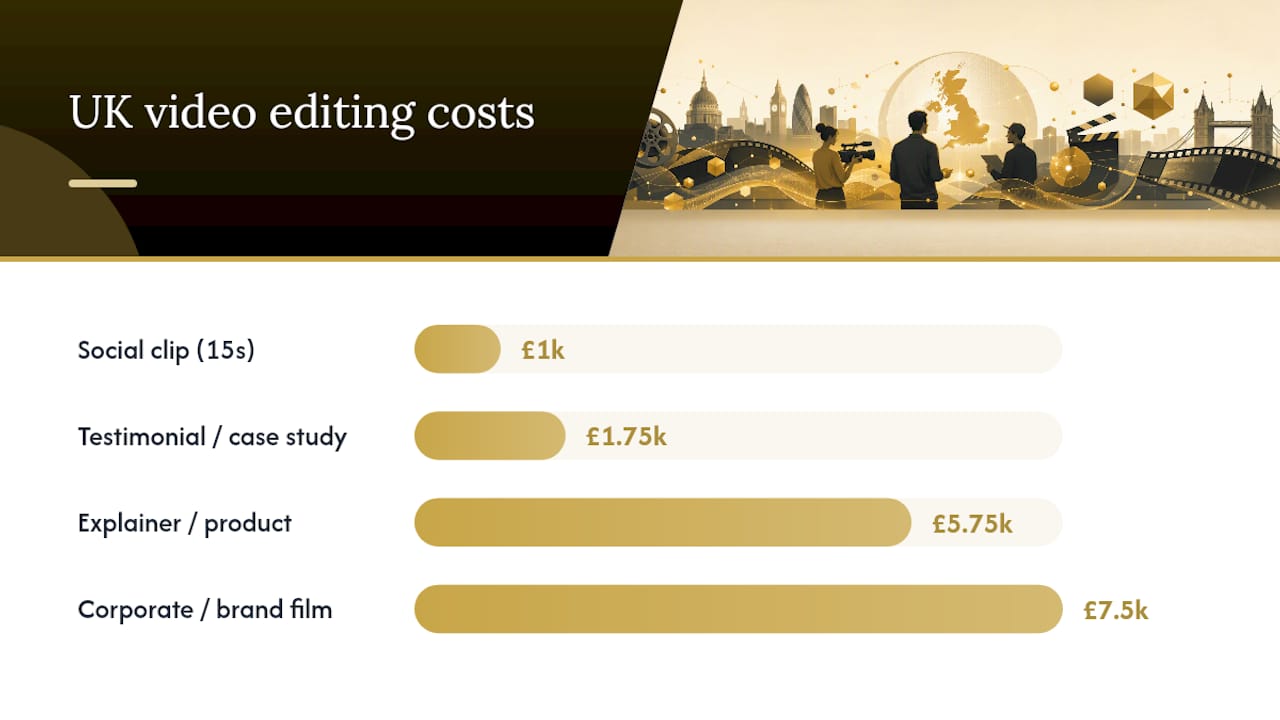
Most professional business video projects in the UK land between about £1,500 and £10,000, with simple social clips starting around £500 and high-end brand films pushing well past £10,000. Here’s how that breaks down by common video type:
| Video type | Typical UK range | Usually included |
|---|---|---|
| Social media clip (15 seconds) | £500 to £1,500 | Editing, captions, one revision, vertical/square formats |
| Testimonial or case study video | £500 to £3,000 | Half-day filming, interview editing, light graphics |
| Explainer or product video | £1,500 to £10,000 | Scripting support, filming or animation, sound design |
| Corporate or brand film | £5,000 to £10,000+ | Multi-day shoot, crew, colour grading, music licensing |
A rough rule of thumb: per-finished-minute costs tend to fall as production complexity rises per second but total spend climbs, because a polished two-minute brand film demands far more setup time than five one-minute clips shot back to back. Bear in mind that VAT sits on top of every quoted figure unless a supplier states otherwise, and London-based studios typically charge a premium over the rest of the UK. Factor both into your budget before comparing quotes from different regions.
What actually drives the price of a video?
Two agencies quoting for the same brief can land £3,000 apart, and the gap almost always comes down to a handful of line items that aren’t obvious from a headline price.
- Crew and specialisms: a solo videographer costs less than a director, camera operator, and sound recordist working together.
- Shoot days and locations: multiple locations or a second filming day adds logistics, travel, and setup time on top of the actual footage.
- Talent: paid actors or voiceover artists add fees, and usage rights for their likeness can extend costs beyond the shoot itself.
- Post-production complexity: motion graphics, custom colour grading, and layered sound design often represent a large share of the total agency price.
- Turnaround time: rush jobs cost more, since they push other client work aside.
- Revision rounds: two included rounds is standard; unlimited revisions sound generous but usually signal vague scope rather than genuine flexibility.
- Stock footage, music licensing, and usage rights: these can be bundled or billed separately, and the difference matters more than it looks.
Pro Tip: Ask whether multiple videos can be filmed in a single shoot day. Batching two or three assets against one setup, one crew call-out, and one location fee is one of the simplest ways to cut your per-video cost without cutting quality.
How do you compare quotes from different agencies?
Comparing agency quotes side by side only works if you’re comparing the same thing, and most SMEs discover too late that they weren’t.
- List the exact deliverables each quote promises, down to formats (vertical, square, 16:9) and file types, not just “a video”.
- Check revision rounds explicitly. Two rounds included is typical; if a quote says “revisions as needed”, ask what happens after round three.
- Confirm ownership and licensing terms in writing, including whether you get the raw footage and whether usage extends to paid advertising.
- Flag vague scope language like “social content package” with no stated quantity. That’s where scope creep quietly enters.
- Build a simple matrix: rows for each agency, columns for price, deliverables, revisions, licensing, and turnaround. Gaps become obvious fast.
Red flags worth walking away from: a quote with no breakdown between pre-production, filming, and editing, or one that won’t confirm who owns the final files.
When does a retainer make more sense than paying per project?
A retainer earns its keep once you’re publishing regularly enough that re-negotiating scope every month becomes its own drain on time. Consistent monthly volume, a dedicated producer who already knows your brand, and faster turnaround are the three things a retainer buys you that project-by-project pricing rarely can.
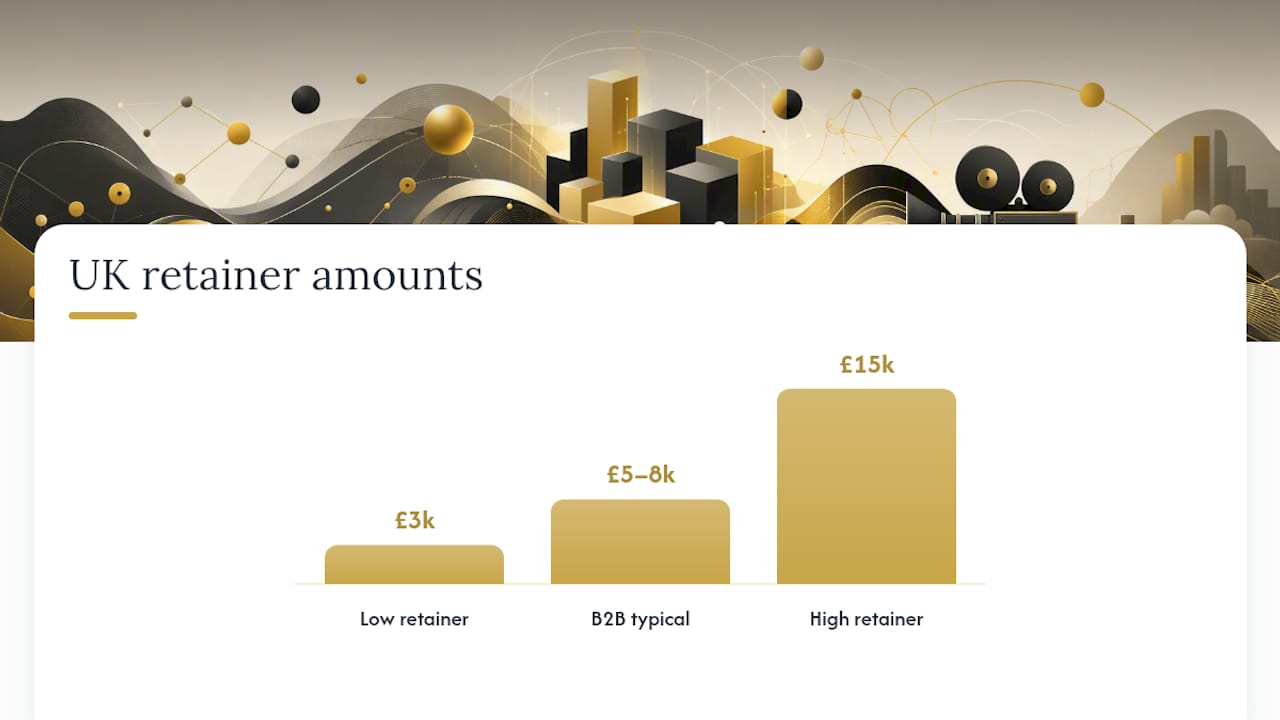
UK retainers for steady video output commonly run £3,000 to £15,000 per month, with many B2B retainers sitting around £5,000 to £8,000 depending on volume and production value. On the other end, a practical comparison suggests the tipping point where hiring in-house beats outsourcing sits at roughly 40-plus videos a year at mid-production value. Below that threshold, an agency retainer or project work usually wins on cost per video.
- Retainers typically specify a fixed number of assets per month, which caps your spend and the agency’s obligation.
- A dedicated producer removes the need to re-brief a new editor every time, cutting revision cycles.
- Negotiate scope carefully upfront: agree exactly what counts as one “asset” and how unused months roll over, if at all.
What should a professional quote actually include?
A proper quote reads like a build sheet, not a single number. If yours doesn’t break down the following, ask for a revised version before signing anything.
- Pre-production: scripting, storyboarding, location scouting, casting if needed.
- Production: number of shoot days, crew size, equipment, travel.
- Post-production: editing hours, graphics, colour grading, sound design, and music licensing.
- Deliverables: exact number of videos, formats, and resolutions.
- Revisions: how many rounds are included and what counts as a minor versus major change.
- Licensing and ownership: who owns the raw footage, and where the finished video can be used.
- Timeline and payment schedule: key milestones and whether payment is staged or due on delivery.
Any agency worth hiring will hand this over without being asked twice.
What ten questions should you ask on a first call?
A short screening call, done properly, will surface most of the hidden costs before you ever see a formal quote.
- What’s included in the base price, and what triggers an extra charge?
- How many shoot days does this scope realistically need?
- How many revision rounds are included?
- Who owns the final files and raw footage?
- Can the finished video be used in paid advertising, or does that cost more?
- What’s the typical turnaround from shoot to delivery?
- Will one producer handle the whole project, or does it pass between teams?
- How do you handle rush requests?
- What reporting or check-ins happen during production?
- What happens if we want to scale up volume later?
How Blindspot prices video editing for local businesses
We scope video work the same way we scope any content package: by output, not by guesswork. A quote from Blindspot breaks down pre-production, filming, and editing separately, states revision rounds upfront, and confirms who owns the footage before a contract is signed. Working across Sussex service businesses, from security firms to trades, we’ve seen how far a batched, retainer-based approach stretches a modest monthly budget compared to one-off commissions.
— Harry
Get a video editing quote built around your business
Most of the pricing models above assume you’re piecing together video work alongside separate SEO, social, and content contracts, which is exactly where costs quietly duplicate. Blindspot folds video editing and content creation into the same retainer as your wider marketing, so you get one producer, one invoice, and no re-briefing a new editor every quarter.
A typical retainer might include a monthly batch of social clips, a quarterly case study video, and light motion graphics for paid ads, all scoped against your actual publishing cadence rather than a generic package. That predictability is the whole point: you know your cost per asset before the month starts, and turnaround stays consistent because the same team handles every brief. If you’re weighing up whether a retainer or project pricing fits your business, get in touch with Blindspot for a tailored quote based on your actual content volume.
Sources
- UK Video Marketing Costs 2026: What to Spend and Where
- In-House vs Outsource Video Team UK 2026 | MKTRL Production
- What Is a Video Production Retainer? A 2026 Guide for Marketing Teams — KENZO STUDIO
FAQ
How much does video editing cost for a small business?
A single edited video for a small business typically costs between £500 and £3,000, depending on length, filming requirements, and how much post-production graphics or sound design it needs. Simple social clips sit at the lower end; testimonial or explainer videos with filming involved push toward the higher figure.
Is a retainer cheaper than paying per project?
A retainer usually works out cheaper once you need a steady stream of content, since UK retainers commonly run £3,000 to £15,000 a month for consistent output rather than repeated one-off project fees. Below roughly 40 videos a year, outsourcing to an agency, whether by retainer or project, tends to beat hiring in-house on cost.
What should be included in a video editing quote?
A proper quote separates pre-production, filming, and editing costs, and states the number of revision rounds, delivery formats, and who owns the final files. If a quote skips any of these, ask the agency to itemise it before agreeing to anything.
Does Blindspot offer video editing as part of a marketing package?
Yes, Blindspot includes video editing and content production within its broader content creation services for local service businesses. Pricing depends on scope and volume, so current rates are best confirmed directly with the team.
Why do video editing quotes vary so much between agencies?
Quotes vary because of differences in crew size, shoot days, post-production complexity, and licensing terms, not just raw editing time. Two agencies quoting for the same brief can land thousands apart once you factor in motion graphics, colour grading, and how many revision rounds are included.